Scent
Blend your own scent. Pour your own candle.
What happens in the room.
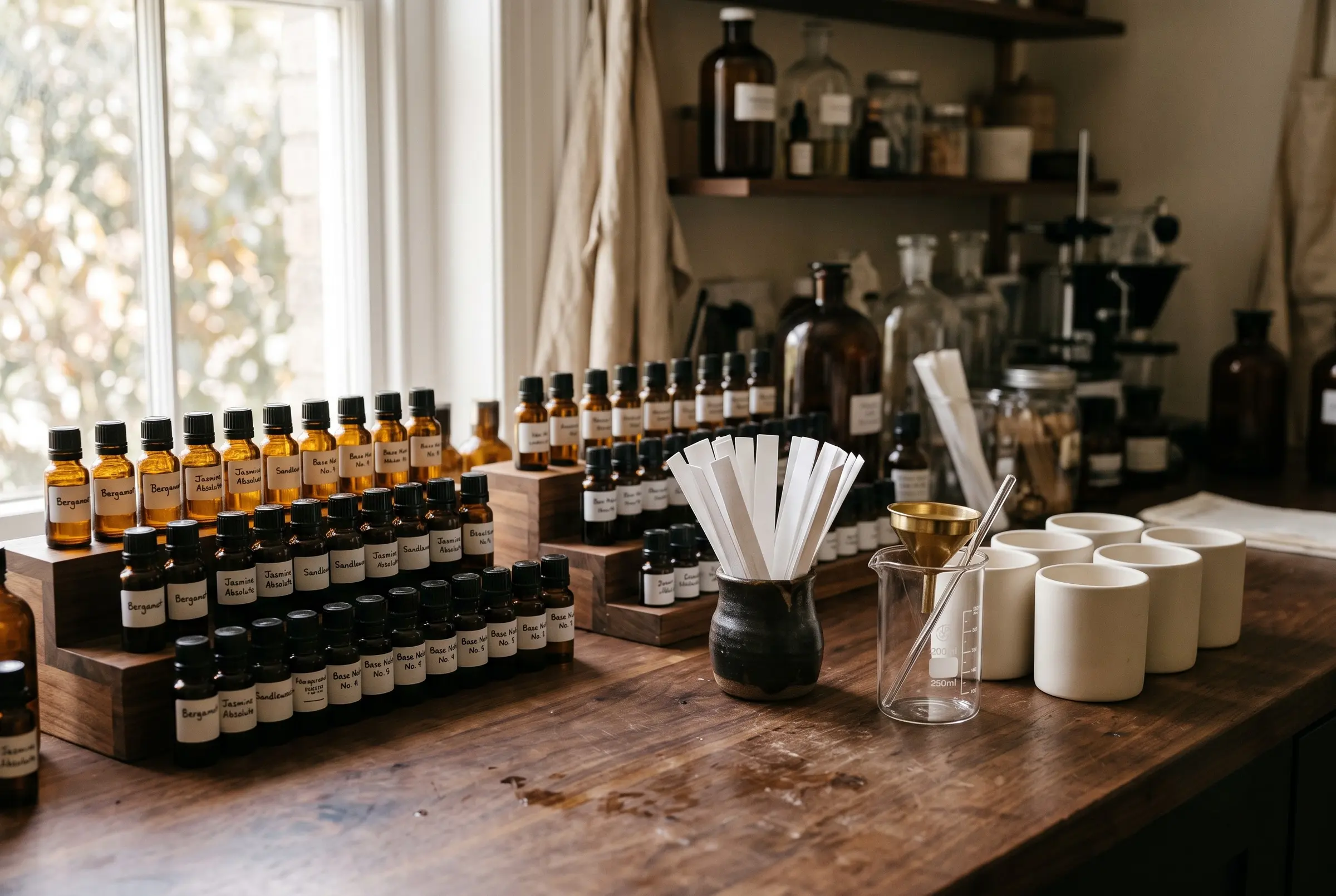
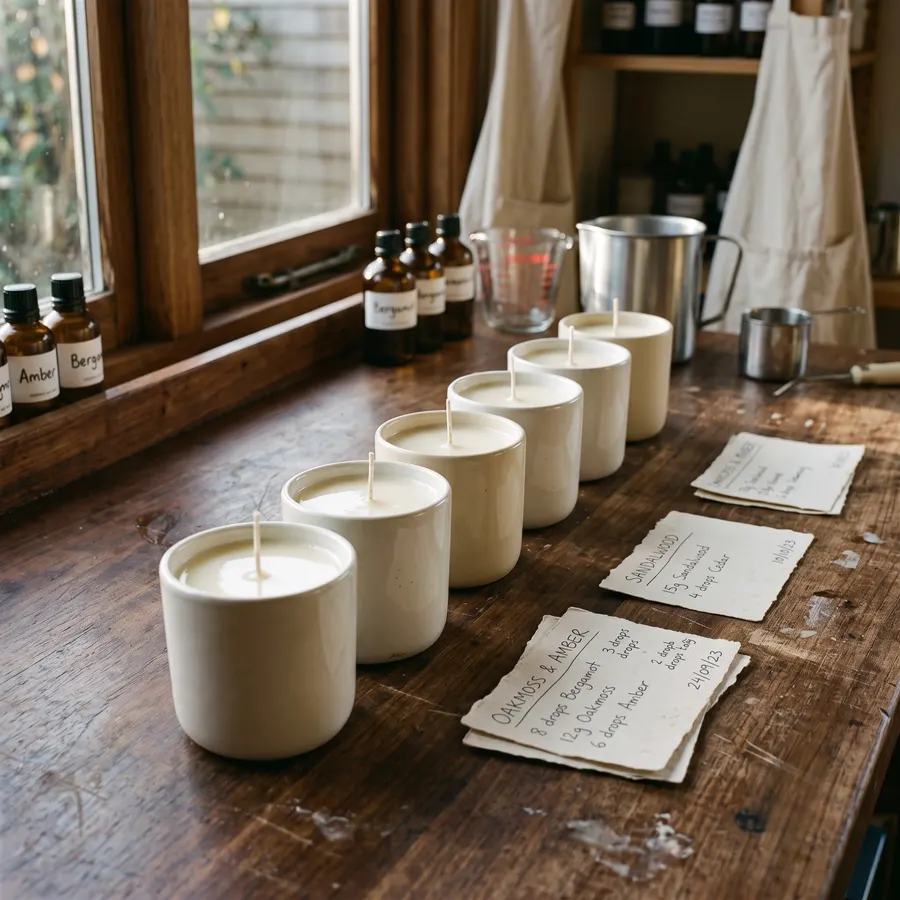
You sit down to a working perfumer's bench: amber bottles grouped by family, blotter strips, a beaker, an empty vessel waiting for wax. Before anything gets blended, you learn how a scent is built, why the first thing you smell is gone in twenty minutes, and what's actually doing the work an hour later.
Then you blend. You'll smell widely before you narrow, and you'll count drops like a chemist, because the recipe card is what lets you make it again. Expect to change your mind twice. When the blend sits right, you pour it into wax.
It gets opinionated fast, in a good way. Smell is personal, and the table will disagree cheerfully about sandalwood. The candles cure overnight, and the recipe card means your blend isn't a one-off.
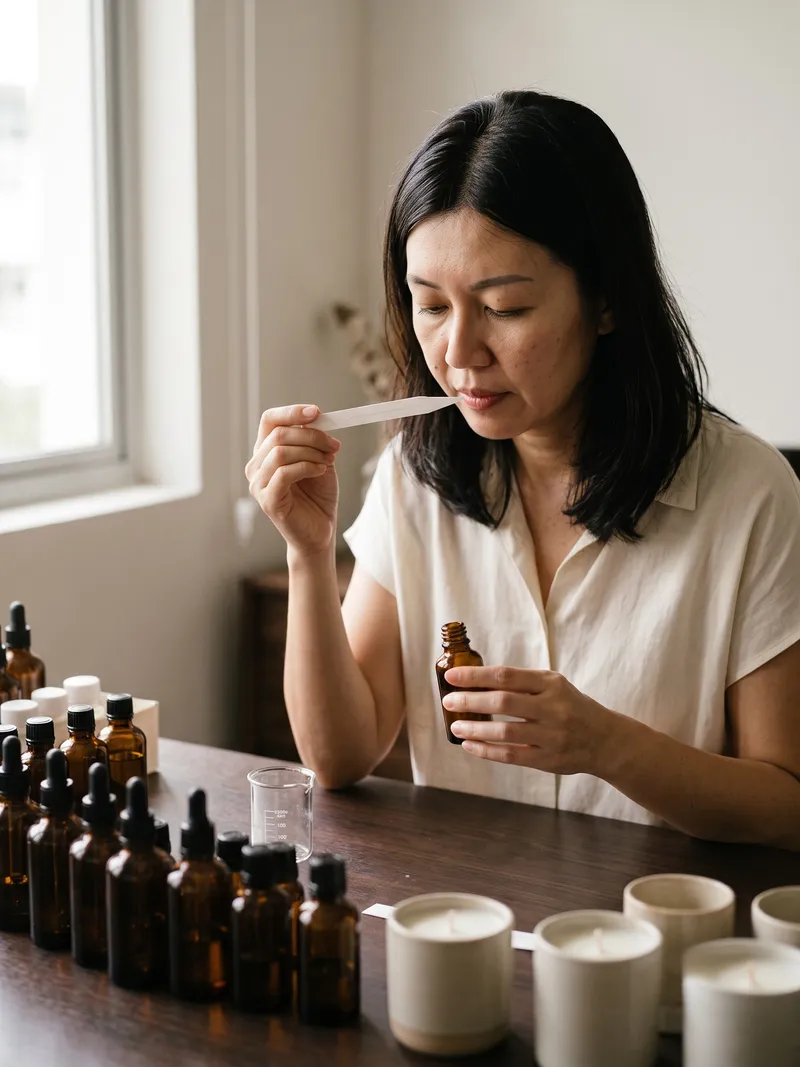
Led by the perfumer we work with.
The oils on the bench come from the perfumer’s own working library, the same set they blend with professionally. Ask why two vanillas smell nothing alike, or what “clean” actually means on a label. The answers are better than the marketing.
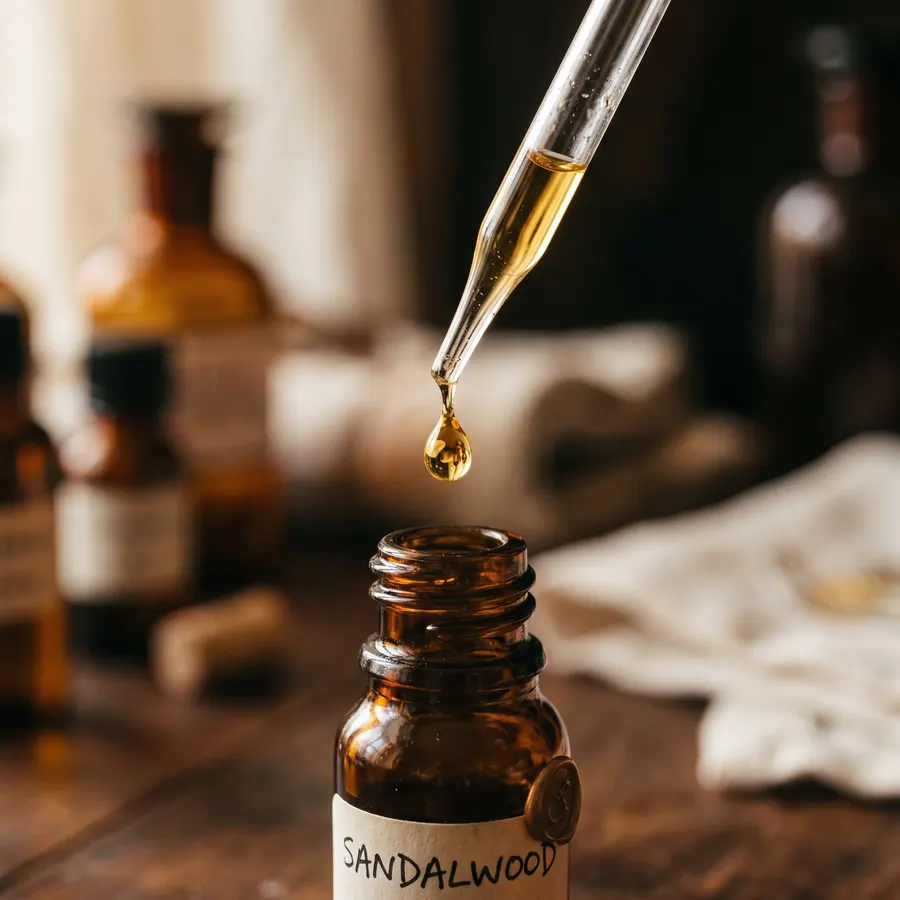
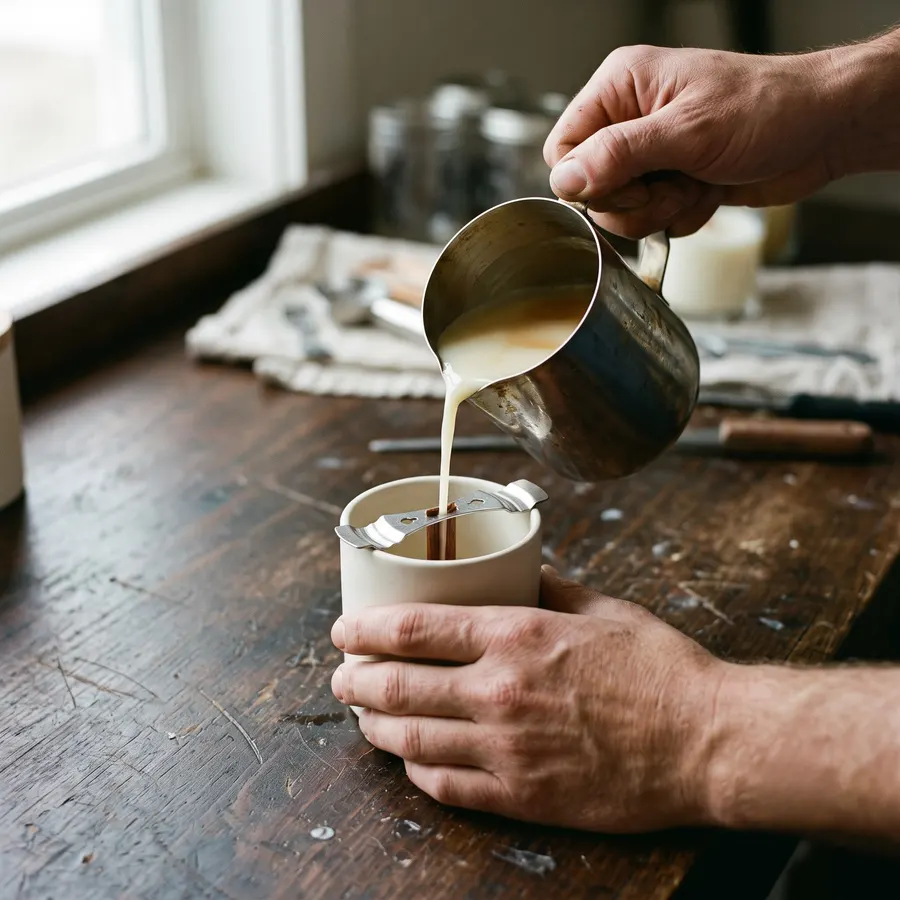
For weeks afterward, someone's desk smells like the afternoon you all made something.